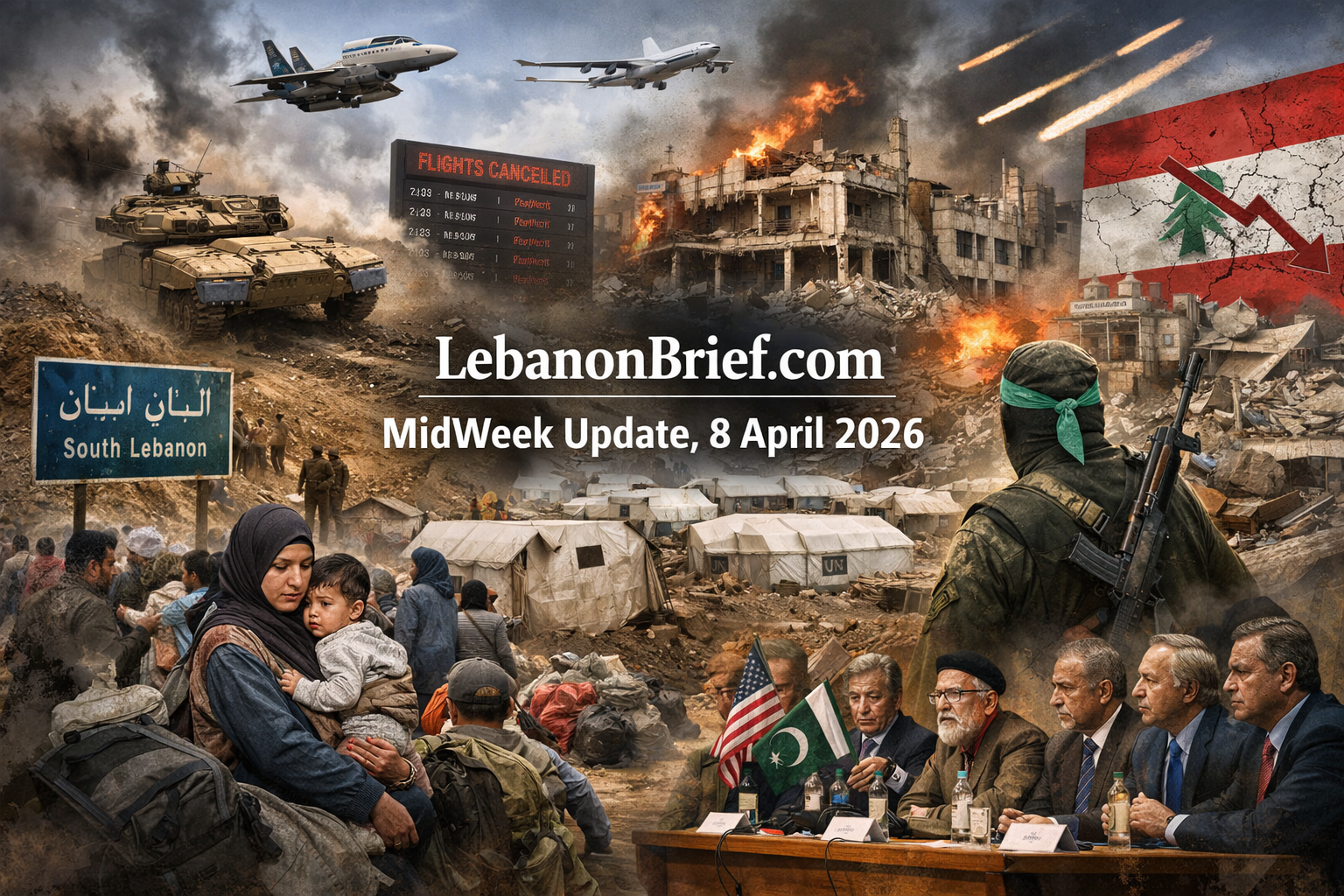
Summary
- A two-week US–Iran ceasefire has been agreed but explicitly excludes Lebanon, allowing Israeli operations against Hezbollah to continue uninterrupted.
- Israel is accelerating ground and air operations to establish a buffer zone in southern Lebanon, signaling sustained military intent independent of Iran diplomacy.
- Lebanon faces a major humanitarian crisis, with over 1–1.2 million displaced (≈20% of population) and casualties exceeding 1,500.
- Continued Hezbollah attacks into northern Israel maintain a cycle of escalation, limiting prospects for localized de-escalation.
- Conflicting diplomatic messaging highlights a lack of coordinated international framework on Lebanon, increasing uncertainty.
1. Strategic / Political
- The US–Iran ceasefire creates a dual-track conflict, with regional de-escalation occurring in parallel to continued fighting in Lebanon. Israel has endorsed the pause with Iran while explicitly excluding Lebanon.
- Implication: Lebanon is now the primary active theater, increasing its strategic exposure and reducing diplomatic protection.
- Conflicting messaging from mediators underscores fragmented diplomacy and limited leverage over Israeli operations.
- Direction / Outlook: How much Lebanon incorporated into formal ceasefire negotiations in the near term; any de-escalation would depend indirectly on Iranian influence rather than a standalone agreement.
2. Security / Military
- Israel is conducting full-spectrum operations (air, ground, artillery), with additional troop deployments and territorial incursions in the south.
- Implication / Outlook: Israel is likely to establish and hold a de facto buffer zone in southern Lebanon within weeks, with emerging indicators of longer-term presence.
- Hezbollah continues sustained but calibrated attacks into northern Israel.
- Implication / Outlook: The conflict is most likely to settle into a prolonged, low-to-mid intensity attritional pattern, rather than immediate escalation or resolution.
- Strike patterns show expanded targeting, including infrastructure and high-risk civilian areas.
- Implication / Risk: Civilian exposure is rising; escalation risk remains tied to any shift in Hezbollah strike depth, which could trigger broader Israeli operations deeper into Lebanon.
3. Humanitarian / Civilian Impact
- Displacement has exceeded 1–1.2 million people, among the fastest-growing crises globally.
- Implication / Outlook: Mounting pressure on urban centers and state capacity, raising risks of service disruption and localized instability.
- Continued infrastructure strikes, including roads and bridges, are isolating key regions.
- Direction: Humanitarian access is expected to deteriorate, compounding civilian vulnerability.
4. Regional / Economic Context
- The ceasefire reduces immediate risk of full regional war, but Lebanon’s exclusion sustains localized escalation with spillover potential.
- Economic impacts are intensifying through aviation disruption, infrastructure damage, and displacement costs.
- Outlook: لبنان’s economic strain will deepen, reinforcing long-term instability even in the absence of further escalation.
- International reaction is likely to intensify rhetorically as civilian casualties rise.
- Implication / Outlook: External pressure is unlikely to materially constrain Israeli operations without a shift in US policy.
What Next (Forward Indicators)
- Israeli forces likely to consolidate a buffer zone in southern Lebanon.
- Conflict likely to stabilize at sustained attritional intensity.
- Lebanon likely to remain outside formal ceasefire talks.
- Escalation risk if Hezbollah expands strike range or targets.
- Humanitarian pressures will continue, especially in urban areas.
- International pressure to rise, with limited operational impact.
Comment
The exclusion of Lebanon from the US–Iran ceasefire effectively isolates it as the active conflict arena, while broader regional tensions temporarily ease. Momentum points toward a protracted, managed escalation, with Israel shaping conditions on the ground and limited diplomatic constraint. Humanitarian and structural pressures are likely to define the next phase as much as military dynamics.

Leave a Reply