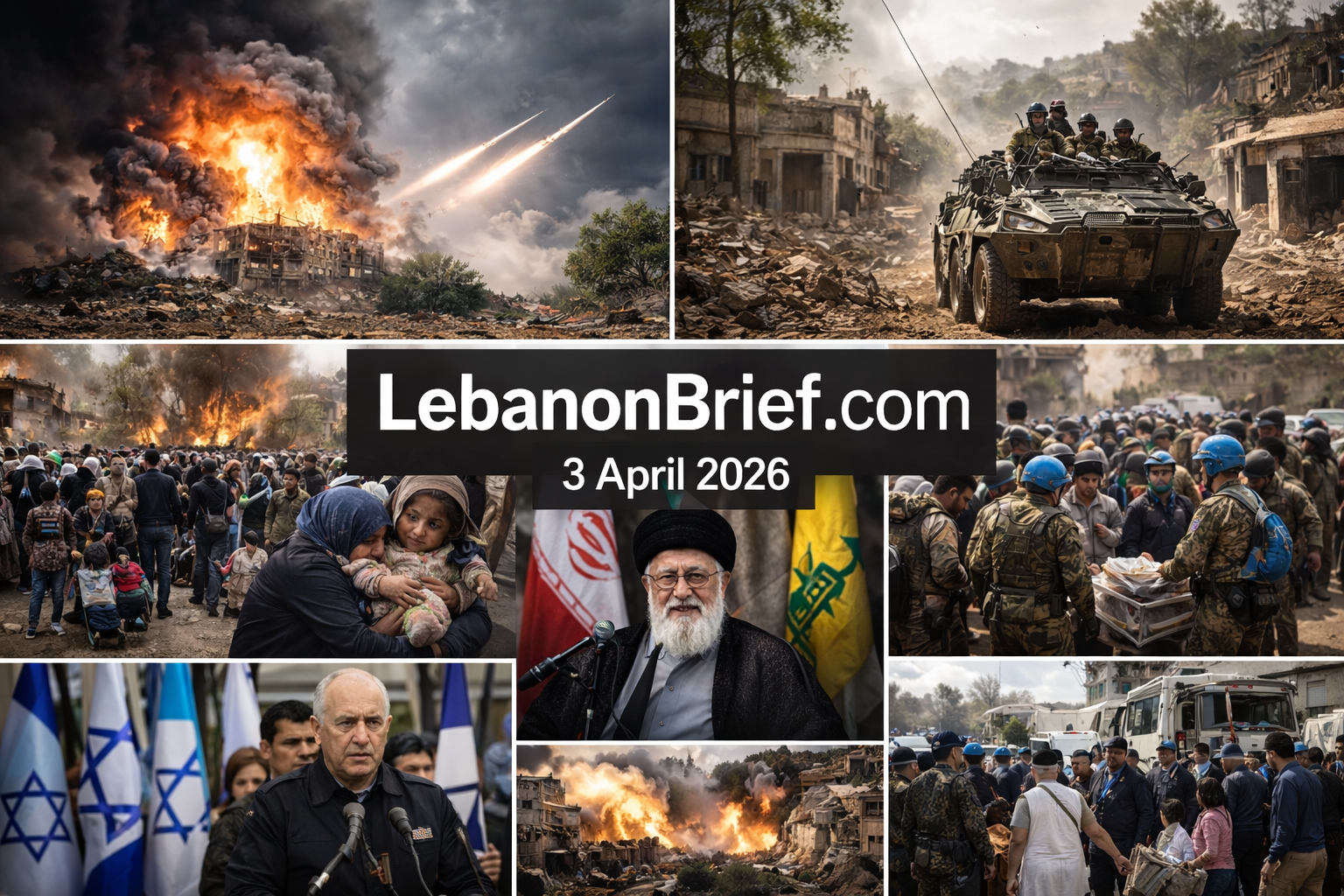
Lebanon–Israel Front: Coordinated Multi-Front Escalation as Israel Signals Expanded Ground Objectives
Summary
- Conflict intensity increased again with over 150 rockets fired from Lebanon and additional launches from Iran and Yemen, indicating deeper coordination among Iran-aligned actors.
- Israel escalated militarily, expanding airstrikes and advancing ground forces with stated intent to establish an 8 km buffer zone inside southern Lebanon.
- Civilian and infrastructure impact is worsening, with casualties rising to 1,345 and displacement exceeding one million, placing severe strain on Lebanon’s stability.
- Political pressure is rising inside Lebanon, as the government criticizes Hezbollah’s role while seeking diplomatic solutions with limited leverage.
- International concern is increasing, but remains largely limited to humanitarian appeals without a clear path to de-escalation.
Main Text
1. Military Dynamics: Escalation and Expansion of Battlespace
- Hostilities intensified on April 2, with sustained rocket fire from southern Lebanon into northern Israel (more than 150 rockets), alongside missile launches from Iran and reported strikes by Yemen’s Houthis.
- This reflects increasing coordination among Iran-aligned actors, expanding the conflict beyond a single front.
- The scale and timing of attacks suggest an effort to pressure Israel across multiple directions simultaneously, particularly during a sensitive holiday period.
- Israel responded with extensive airstrikes across southern Lebanon, including areas in Nabatieh, Bint Jbeil, and Marjayoun, combined with artillery fire.
- The pattern of strikes indicates a focus on degrading Hezbollah’s operational infrastructure, though civilian areas have been significantly affected.
- Damage to infrastructure, including electricity networks, is reducing local resilience and increasing humanitarian pressure.
- Israeli ground operations expanded, with forces reportedly advancing into border villages and attempting to isolate key towns such as Bint Jbeil.
- Statements about creating an 8 km security buffer zone suggest a shift toward sustained territorial control rather than temporary operations.
- This raises the likelihood of prolonged military presence inside Lebanese territory.
- Hezbollah maintained operational activity, claiming attacks on Israeli forces and armored units.
- Continued engagement indicates its frontline capabilities remain active despite Israeli strikes.
- The group appears to be pursuing a strategy of attrition, aiming to increase the cost of Israeli advances rather than escalate dramatically.
2. Civilian Impact and Humanitarian Pressure
- Casualties continue to rise, with 1,345 killed and more than 4,000 injured, including 27 deaths in the past 24 hours.
- The steady increase reflects ongoing high-intensity conflict conditions.
- Displacement has exceeded one million people, creating severe pressure on housing and public services.
- This represents a large-scale humanitarian crisis with long-term implications for social and economic stability.
- Calls for humanitarian corridors are increasing from political and religious leaders.
- The absence of such corridors highlights limited protection mechanisms for civilians.
- Reports of strikes affecting journalists and civilian gatherings have drawn criticism from the United Nations.
- These incidents increase international scrutiny and potential legal pressure on Israel.
3. Lebanese Political Landscape: Internal Strain and Limited Leverage
- Prime Minister Nawaf Salam stated that there is no clear end to the conflict, warning of possible long-term Israeli presence in southern Lebanon.
- This reflects concern over loss of territorial control and prolonged instability.
- The government has implicitly criticized Hezbollah’s coordination with Iran, signaling internal political tension.
- This suggests growing divisions within Lebanon’s political system, though without immediate impact on the conflict.
- Social pressures are increasing, with reports of host communities struggling to accommodate displaced populations.
- This indicates potential internal instability if displacement continues.
- Diplomatic efforts are ongoing, but no active negotiations are currently visible.
- Lebanon appears to be seeking greater international involvement to manage the crisis.
4. Regional and International Context
- The conflict is increasingly linked to a broader confrontation involving Iran, Israel, and the United States, with direct and indirect attacks across multiple countries.
- This raises the risk of further regional escalation.
- Israeli leadership has issued direct threats against Hezbollah leadership, indicating strong deterrence messaging.
- International responses remain limited and fragmented, including:
- Humanitarian aid pledges
- Diplomatic criticism
- Isolated political measures
- No major coordinated international initiative has emerged to force de-escalation, suggesting continued escalation risk in the near term.
What Next (Forward Indicators)
- If Israel establishes the planned buffer zone → expect prolonged ground operations and increased guerrilla-style attacks by Hezbollah.
- If Iran increases direct missile involvement → risk of broader regional escalation, including possible United States response.
- Watch for Hezbollah expanding strikes deeper into Israel → potential shift to a higher level of conflict.
- If displacement continues to grow → rising internal instability and pressure on Lebanese institutions.
- Watch for renewed diplomatic initiatives from major international actors → possible early sign of de-escalation efforts.
- If international forces or UN positions are affected → increased risk of external intervention or stronger diplomatic pressure.
Comment
The conflict is shifting from a contained border confrontation to a broader, coordinated regional escalation. Israel’s apparent move toward establishing a buffer zone suggests longer-term military intent, while Hezbollah and its allies are signalling sustained resistance.

Leave a Reply