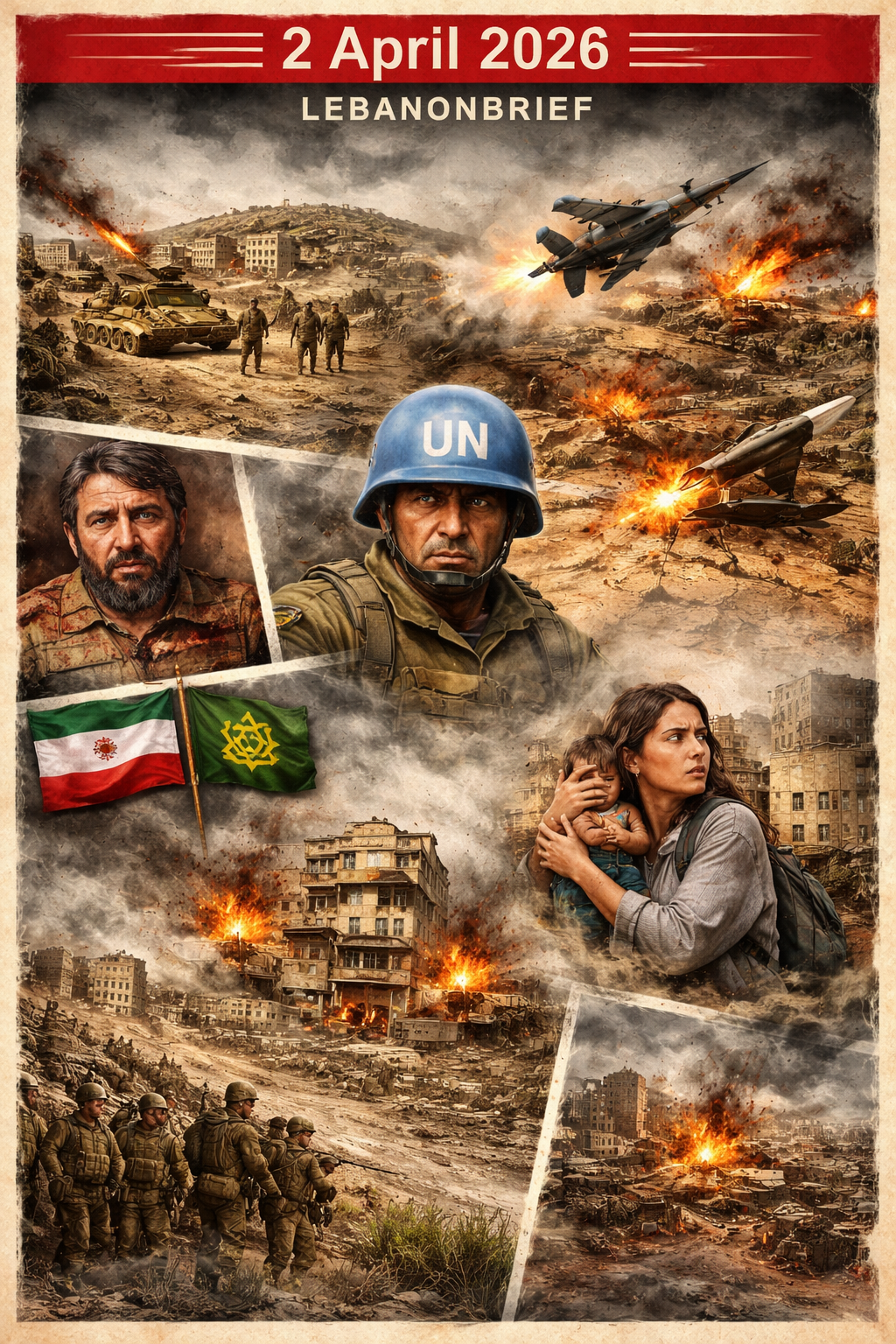
Southern Lebanon Escalation: Israeli Ground Expansion and Hezbollah Attrition Under Growing Civilian Pressure
Summary
- Israeli forces are expanding and consolidating ground operations in southern Lebanon, signalling a shift toward sustained territorial pressure and potential buffer zone objectives.
- Hezbollah maintains active resistance and cross-border attacks but is facing leadership losses and localized weakening.
- The killing of Hezbollah’s Southern Front commander represents a significant disruption to its operational structure, though not a decisive blow.
- Civilian vulnerability is increasing amid Lebanese Army withdrawals and widening strikes, creating governance and humanitarian gaps.
- Iran’s continued backing of Hezbollah suggests the conflict is likely to persist rather than de-escalate in the near term.
Security and Military Dynamics
- Israeli forces have expanded their ground presence across southern Lebanon, now controlling an estimated 162 km². Operations are coordinated across multiple fronts, combining armored units, infantry, engineering teams, and sustained air and artillery support.
- Implication: This indicates a shift from limited cross-border incursions to a more deliberate effort to shape terrain and secure tactical positions, particularly elevated ground and key access routes.
- Direction: Continued gradual expansion is likely, rather than rapid territorial breakthroughs.
- The operational environment remains fluid. Israeli units have entered some populated areas but encountered resistance leading to temporary withdrawals before renewed advances.
- Implication: Hezbollah retains the ability to disrupt Israeli momentum through localized defensive tactics, preventing quick consolidation of control.
- Direction: A pattern of incremental advances followed by counterattacks is expected to continue.
- Hezbollah continues to rely on asymmetric warfare, including ambushes, anti-tank missiles, mortars, and drone and rocket strikes into northern Israel. Recent rocket fire triggering alarms in the Galilee and reported strikes near Haifa demonstrate sustained operational reach.
- Implication: Despite pressure on its positions, Hezbollah maintains its capacity to impose costs inside Israel, reinforcing deterrence.
- Direction: Cross-border attacks will likely remain central to Hezbollah’s strategy.
- Hezbollah’s reported use of surface-to-air missiles against Israeli aircraft marks a notable escalation.
- Implication: This introduces additional operational risks, particularly to low-altitude flights, including potential spillover risks to civilian aviation near Beirut.
- Direction: If sustained, this could broaden the scope of the conflict and complicate Israeli air operations.
Leadership Targeting and Organizational Impact
- The targeted killing of Hezbollah Southern Front commander Youssef Ismail Hashem represents a significant operational loss. He oversaw key formations across southern Lebanon and commanded elite units responsible for frontline operations.
- Implication: This is one of the most consequential leadership losses in the conflict and may disrupt coordination across multiple sectors in the short term.
- Direction: Temporary disorganization is likely, though Hezbollah’s decentralized structure may mitigate long-term impact.
- Hezbollah has continued operations despite leadership losses, launching counterattacks in areas such as Al-Khyam and Al-Qantara within hours.
- Implication: The group retains operational resilience and redundancy in command structures.
- Direction: Leadership attrition alone is unlikely to significantly degrade Hezbollah’s overall combat capability in the near term.
Civilian and Humanitarian Situation
- Civilian exposure is increasing, particularly following the withdrawal of the Lebanese Army from several southern villages. Residents report feeling unprotected and caught between Israeli operations and Hezbollah presence.
- Implication: The absence of state security forces creates a governance vacuum, heightening risks of displacement and instability.
- Direction: Pressure on civilians is likely to intensify, especially if fighting spreads further into populated areas.
- Casualties continue to rise, with over 1,300 deaths reported in Lebanon and thousands wounded. Recent strikes in Beirut’s southern suburbs and other areas indicate a widening geographic scope of hostilities.
- Implication: Expanding strikes increase humanitarian strain and domestic political pressure, while also drawing greater international attention.
- Direction: Urban centers may remain at risk, particularly where Hezbollah-linked infrastructure is present.
- Incidents involving UN peacekeepers, including fatalities, have prompted international concern and ongoing investigations.
- Implication: These incidents increase scrutiny on all parties and may constrain operational environments for international forces.
- Direction: UNIFIL’s role may become more cautious and limited.
Political and Regional Context
- Internal Lebanese dynamics remain strained. Calls for implementing UN Security Council Resolution 1701 and enhancing civilian protection reflect the state’s limited capacity to manage the conflict.
- Implication: Weak state authority reinforces reliance on non-state actors and external actors.
- Direction: Institutional paralysis is likely to persist.
- Emerging proposals to limit Hezbollah’s military presence in Beirut indicate attempts to shield the capital from Israeli strikes.
- Implication: This highlights growing internal tensions between national stability concerns and Hezbollah’s operational priorities.
- Direction: Political friction may increase but is unlikely to produce immediate change.
- Iran has reaffirmed its support for Hezbollah leadership, signaling continued alignment.
- Implication: External backing reduces incentives for de-escalation and strengthens Hezbollah’s strategic position.
- Direction: The conflict is likely to remain part of a broader regional confrontation.
- The UN Security Council has condemned incidents affecting peacekeepers without attributing responsibility.
- Implication: International consensus remains limited, reducing the likelihood of decisive diplomatic intervention.
- Direction: External engagement is expected to remain cautious and measured.
What Next (Forward Indicators)
- If Israeli forces secure additional high ground → expect increased operational pressure on Hezbollah positions and deeper advances.
- If Hezbollah leadership losses continue → watch for signs of reduced coordination or increased reliance on decentralized tactics.
- If civilian casualties rise significantly → expect stronger international calls for ceasefire or humanitarian measures.
- If surface-to-air missile use persists → monitor for impacts on civilian aviation and escalation in air operations.
- If internal Lebanese pressure to demilitarize Beirut grows → watch for heightened political tensions.
- If Iran increases support → expect prolonged and potentially intensified conflict dynamics.
Comment
The conflict is moving toward a sustained, attritional phase characterized by gradual Israeli advances and persistent Hezbollah resistance. Neither side appears positioned for a decisive shift in the near term. The underlying trajectory points to prolonged instability, increasing civilian exposure, and limited prospects for de-escalation.

Leave a Reply